I just got back from an excellent weeklong trip to Anilao to attend Underwater Photography Guide's photo workshop with Scott Gietler and Mike Bartick. It was tons of fun and I feel like my photography skills improved markedly throughout the week.
I saw many firsts on this trip: saron shrimp, stargazer (3 of them), ocellated octopus, thecacera picta nudibranch (commonly called the "pikachu"), sawblade shrimp, pygmy cuttlefish, and lots and lots of interesting nudis and flatworms. Other notable sightings include jorunna funebris laying eggs (2 of them), 2 giant frogfish, 2 bobbit worms capturing prey, mating nembrotha chamberlaini, 2 napoleon snake eels, a trumpetfish eating a damselfish, cavorting risbecia tryoni, clownfish eggs, and more than 40 distinct sea slug species. There were several dives where we saw 8 or more species of nudibranch on one dive. Other divers saw flamboyant cuttlefish, boxer crab, xenia mimic nudibranch, rhinopias, mimic octopus, and wonderpus, but I missed these. Anilao is well known for great macro life but the wide angle opportunities were fantastic as well, with some participants getting some excellent reef and fish shots.
Anilao's many dive sites offer a great diversity of seascapes. There are black sandy bottoms (Secret Bay, Mainit Bubbles), white sandy bottoms (Anilao Pier), wall dives (Kirby's Rock), sloping reefs (Twin Rocks, Aphol Reef), sandy slopes (Mato Point), rubble patches (Bethlehem), hard coral forests (Cathedral), and everything in between. I've always enjoyed diving Anilao and the more I see, the more special I realize it is.
Each day would start early with 2 dives before lunch. We would break for lunch at the resort, do a lecture, and then do 2 more dives in the afternoon/evening. Lecture topics included local marine life and how to best photograph it, wide angle photography, taking your photography to the next level, and basic photoshop skills.
Boat and buddy assignments were flexible, and took into account site preferences and diving styles. There were generally anywhere from 1 to 4 divers per guide/boat. Scott and Mike rotated so that they got to spend time with everyone. Dives averaged 60-80 minutes and were never rushed. We often sucked our tanks dry in the shallows, right beneath the boat.
Crystal Blue is a nice and cozy resort. It is located right in the middle of the channel in what is probably the best location in all of Anilao for easy access to the best dive sites. The service from the dive guides, boat crew, restaurant, and resort staff was top notch.
Just one word on conservation: Anilao has done a pretty good job of protecting its marine resources by restricting commercial fishing in the area. However, there are a lot of improvements that can still be made. The boats often drop anchor at dive sites, when it would be much better to have permanent mooring buoys installed. It is still common to see trash from nearby villages and resorts floating in the water. And dive resorts and guides need to do a lot more to raise the standard of diving in the area in order to protect the marine life.
It was really beneficial to spend time with 2 experienced photographers as they gave tips and critiques and were open to our questions. It was also great to dive with like minded folk and to share our passion with others. I'll be back for future trips, that's for sure.
Tuesday, May 31, 2011


Anilao Photos May 2011
Just got back from an excellent trip to Anilao with Underwater Photography Guide. Here's a quick selection of photos. Full set of photos here.
 Saron shrimp at Cathedral. 60mm, 1/250s, f/22, ISO 200
 Giant frogfish at Secret Bay. 60mm, 1/250s, f/16, ISO 200
 Stargazer at Anilao Pier. 60mm, 1/250s, f/22, ISO 200
 Noumea Alboannulata at Bethlehem. 105mm, 1/250s, f/22, ISO 200
 Xeno crab at Secret Bay. 105mm, 1/250s, f/20, ISO 200
 Sawblade shrimp at Secret Bay. 60mm, 1/250s, f/20, ISO 200
 Yawning pink anemonefish at Kirby's Rock. 105mm, 1/250s, f/13, ISO 200
 Cavorting risbecia tryoni at Arthur's Rock. 60mm, 1/250s, f/18, ISO 200
 Saron shrimp at Cathedral. 60mm, 1/250s, f/22, ISO 200
 Giant frogfish at Secret Bay. 60mm, 1/250s, f/16, ISO 200
 Stargazer at Anilao Pier. 60mm, 1/250s, f/22, ISO 200
 Noumea Alboannulata at Bethlehem. 105mm, 1/250s, f/22, ISO 200
 Xeno crab at Secret Bay. 105mm, 1/250s, f/20, ISO 200
 Sawblade shrimp at Secret Bay. 60mm, 1/250s, f/20, ISO 200
 Yawning pink anemonefish at Kirby's Rock. 105mm, 1/250s, f/13, ISO 200
 Cavorting risbecia tryoni at Arthur's Rock. 60mm, 1/250s, f/18, ISO 200
Thursday, May 12, 2011
Underwater Photography Guide Photo Workshop
I am very excited that I will be joining Scott Gietler and Mike Bartick from Underwater Photography Guide on a photo workshop trip to Anilao in late May. I just got back from a short trip to Anilao over Easter and the diving was fantastic as usual. This will be my third trip to the area. I have been studying Scott's website to improve my photography skills for some time, so when he announced this trip several months ago, I jumped at the opportunity. Scott does underwater photographers a great service by publishing his free website that is full of instruction, tips, information, and great pictures. It is also a good source of inspiration as the photos on his site are from a number of world class photographers.
The entire trip is 10 days but I will be going for 7. We will be staying at Crystal Blue Resort.
For some info on Anilao and great photos from Scott and Mike, check out:
Diving Anilao (Scott)
Anilao Underwater Photo Essay (Mike)
Here is a snippet from Scott about the Anilao trip:
[Quote]
Experience more photo subjects than you have ever dreamed of.
The entire trip is 10 days but I will be going for 7. We will be staying at Crystal Blue Resort.
For some info on Anilao and great photos from Scott and Mike, check out:
Diving Anilao (Scott)
Anilao Underwater Photo Essay (Mike)
Here is a snippet from Scott about the Anilao trip:
[Quote]
Experience more photo subjects than you have ever dreamed of.
Anilao boasts some of the richest reefs in the world. Whether at 100ft or 10ft depth, you will be inundated with photo subjects that will fill up your memory card before the day is over. Almost all species on our critter list can be found in Anilao - such as rhinopia, blue-ring octopus, hairy frogfish, flamboyant cuttlefish & bobbit worms, along with huge schools of jacks, great barracuda, sharks and beautiful soft corals. Anilao is also the nudibranch capital of the world.
Your hosts are Anilao experts Scott Gietler and Mike Bartick. Mike and Scott know the Anilao reefs inside and out, and will show you where to take that perfect wide-angle, macro or critter behavior shot.
- $1750 includes an amazing 36 dives, including all meals, nitrox, and transport to/from Manila. This is an awesome deal! You just need to purchase airfare to Manila
- 10 nights, 11 days, 4 dives a day
- Deluxe accommodation in sealed rooms with air-con
- Small dive guide to diver ratios, long dives
- Nightly photo clinics and workshops to help you improve your photography
- We will visit the best dive sites early and often! Most sites are just 10-20 minutes from the resort
- May is the best time to dive Anilao, with warm water and great visibility
- Prizes for photographing the most critters, the most nudibranch species, best video, and the best macro, wide-angle, and behavior shots
- 1 week stays may also be available, inquire for prices
- Photographers with even the smallest point and shoot camera will feel very welcome here, and will come home with some great shots
- we will have several boats, so you can dive the type of sites you like
Wednesday, May 04, 2011
In the Name of Conservation
On my most recent trip to Anilao over Easter, we shared a number of dive sites with other groups of divers from other resorts. I couldn’t help noticing the general poor standard of in-water finesse, situational awareness, and conservation-mindedness. We observed lots of instances of divers crashing into the bottom and kicking up corals, sand, and marine life. All open water divers should have the basics such as buoyancy, trim, body positioning, situational awareness, and buddy skills. Dive resorts and guides need to take responsibility for the actions of their clients. If their clients are unaware, apathetic, unsafe, or lacking in skill, something needs to be done. At the very least, they need to speak up and demand better behavior from their clients. If their behavior does not improve, the divers should not be allowed in the water, lest they cause further damage. It is very short-sighted for resorts and guides to turn a blind eye as the reefs and marine life will undoubtedly suffer and this will impact all of us.
I was so excited to see my first bobbit worm on a night dive at Anilao Pier. I settled down on a sandy patch next to it and was waiting patiently, camera in hand, to try to capture the "peak of the action". Suddenly, a group of divers charged by, like a herd of raging bulls, completely unaware that they were stirring up the bottom and causing a huge sandstorm. I looked over to my guide and we shared a moment of disappointment before being engulfed by the dust cloud. Visibility literally went to zero. When the silt settled (only partially settled; Anilao Pier has a sandy bottom and no current so suspended particles can take hours to fully settle), the bobbit worm was covered in sand and the photo opportunity ruined. I can only imagine the impact on the bobbit worm and other marine life affected.
This is not directed at anyone in particular but I would like to make a general statement. If you don't have the skills (whether motor skills, experience, or situational awareness) to dive in delicate environments, please have enough respect and care for the environment to refrain. It is advisable to dive in more benign environments and gain experience before moving on to fragile sites. Even better - please seek appropriate training to improve your buoyancy, trim, body positioning, fin kicks, situational awareness, and buddy skills. I suggest GUE Fundamentals and there are lots of other classes out there that emphasize these basic skills.
To those who observe this type of unacceptable behavior: please, please, please say or do something. Today, I pledged to myself that I will not observe silently anymore. If you care about conservation of the marine environment, please do something. The reefs will thank you and so will I.
Tuesday, April 26, 2011
Anilao Photos April 2011

 Phyllodesmium opalescens at Secret Bay. 60mm, 1/250s, f/25, ISO 200
 Gymnodoris ceylonica at Mato Point. 60mm, 1/250s, f/32, ISO 200
 Wire coral goby at Mato Point. 60mm, 1/250s, f/25, ISO 200
 Pygmy seahorse at Sunview. 105mm, 1/250s, f/25, ISO 200
 Wire coral shrimp at Sunview. 105mm, 1/250s, f/29, ISO 200
 Xeno crab at Sunview. 105mm, 1/250s, f/25, ISO 200
 Sea cucumber crab at Dive 7000. 105mm, 1/250s, f/22, ISO 200
Anilao Trip Report, April 2011
I just got back from 4 days at Acacia Resort in Anilao. It was my second trip there, the first being in April 2010, and it was equally good - maybe it should become an annual tradition? The trip started out a bit slow on the first day but that changed quickly and I found the macro life to be as plentiful and diverse as ever. Highlights of the trip were coconut octopus, lots of wire coral gobies and shrimp, pygmy seahorse, xeno crab, ornate ghost pipefish, bobbit worm, squat lobster, coleman shrimp, and lots and lots of nudis. It was a great trip for macro photography.
Travel to and from Acacia was surprisingly easy despite it being Easter weekend. It's actually a pretty good time to visit, with calm seas and mild currents. The water was a little colder than expected and I needed at 5mm full suit and hooded vest to keep warm. Acacia was nice and homey as usual. The resort was a little more crowded than usual due to the holiday weekend but it was still quite manageable. I dove off a private boat with Marlou as my guide again - he was a good eye and is a really nice guy. Acacia is currently building a new wing to accommodate more rooms. I hope it never loses its small resort feel.
Travel to and from Acacia was surprisingly easy despite it being Easter weekend. It's actually a pretty good time to visit, with calm seas and mild currents. The water was a little colder than expected and I needed at 5mm full suit and hooded vest to keep warm. Acacia was nice and homey as usual. The resort was a little more crowded than usual due to the holiday weekend but it was still quite manageable. I dove off a private boat with Marlou as my guide again - he was a good eye and is a really nice guy. Acacia is currently building a new wing to accommodate more rooms. I hope it never loses its small resort feel.
Wednesday, April 13, 2011
Anilao, Here I Come
Ever since I first went to Anilao in April 2010, I have been dying to go back. The abundance and diversity of macro life just blew me away. The reefs are also very healthy and it is great to see beautiful, colorful soft corals and the critters that make their homes there. I am going to Anilao again for a short trip over Easter break. I will only be diving for 3 days (max 12 dives) but the life is so prolific that I expect to shoot a number of good subjects. On my list for this trip:
Halimeda ghost pipefish
Coconut octopus
Coleman shrimp
Blue ringed octopus
Bobbit worm
Wire coral goby
Wire coral shrimp
Xeno crab
Stargazer
And lots and lots of nudis and flatworms
Halimeda ghost pipefish
Coconut octopus
Coleman shrimp
Blue ringed octopus
Bobbit worm
Wire coral goby
Wire coral shrimp
Xeno crab
Stargazer
And lots and lots of nudis and flatworms
Sunday, March 06, 2011
Winter Diving, Brrr
Today, we dove off Sai Kung. We started bright and early and headed for Basalt Island. Ben and I were one of the first to jump in. We were told the bottom was around 15m and began to descend. Vis was pretty murky and dark as we were descending and then all of a sudden I crash landed on top of Ben (!?). The bottom was in fact at 6m and the vis was so terrible that Ben had hit the bottom and I had landed on top of him. Not a good sign. After a few minutes of trying to see the bottom and each other, we decided to call the dive. I didn't see any point in continuing as vis was barely 0.5m and we were struggling to see the rocky bottom.
It turns out that 2 other teams had also called their dives and so we headed for sheltered Bluff Island instead. Ling joined our team for the next dive. Surprisingly, vis was around 5m - by far the best I have seen in my limited experience in HK. The macro life was quite good and with the help of Ling's very sharp eyes, we saw a baby cuttlefish, baby crocodilefish, baby scorpionfish, one nudibranch, 2 crabs hiding in one hole, peppermint shrimp, and lots of anemones with clownfish and anemone shrimp. Good thing too, as everyone enjoyed the dive and it made up for the blowout first dive.
Water temps were around 17C. I dove with Xerotherm and 300G undergarments and was comfortable, but my hands got cold. Lots of people were diving wet - they are a lot tougher than I am!
It turns out that 2 other teams had also called their dives and so we headed for sheltered Bluff Island instead. Ling joined our team for the next dive. Surprisingly, vis was around 5m - by far the best I have seen in my limited experience in HK. The macro life was quite good and with the help of Ling's very sharp eyes, we saw a baby cuttlefish, baby crocodilefish, baby scorpionfish, one nudibranch, 2 crabs hiding in one hole, peppermint shrimp, and lots of anemones with clownfish and anemone shrimp. Good thing too, as everyone enjoyed the dive and it made up for the blowout first dive.
Water temps were around 17C. I dove with Xerotherm and 300G undergarments and was comfortable, but my hands got cold. Lots of people were diving wet - they are a lot tougher than I am!
Wednesday, December 15, 2010
Manta - Ray of Hope
I recently came across Manta - Ray of Hope. It is a short, well produced documentary highlighting the plight of the manta rays, which have been heavily fished for their gills. The gills are used in "traditional Chinese medicine" and are in high and increasing demand in China and East Asia. Manta ray fishing is less high profile than shark finning but no less destructive and unsustainable. If nothing is done to protect the mantas, their time on this earth may be limited.
Having had the opportunity to dive with and interact with manta rays close up in Bali and Kona, I can say that these experiences were indeed very special and magical. I feel very fortunate to have been able to observe these giant and majestic creatures in their natural habitat, and the memories will stay with me forever.
Please watch the video and help educate the public on this important issue. Only by reducing demand for manta products, will the future of the mantas be secure.
Having had the opportunity to dive with and interact with manta rays close up in Bali and Kona, I can say that these experiences were indeed very special and magical. I feel very fortunate to have been able to observe these giant and majestic creatures in their natural habitat, and the memories will stay with me forever.
Please watch the video and help educate the public on this important issue. Only by reducing demand for manta products, will the future of the mantas be secure.
Ocean Sky Diving, You Suck
I have been very keen to play with the Nauticam D7000 housing as I have been seriously considering upgrading to the D7000. Nauticam's local dealer is Ocean Sky Diving. I called them a couple of weeks ago and they told me that the housing would be available today. I called them again today and the lady who answered the phone said that they had them in stock. When I walked in, the lady took me to the camera area and promptly directed me to a D700 housing. D700, not D7000. No shit you have the D700 housing in stock, it was released more than a year ago. And of course, they did not have a D7000 housing in stock. All she could do was shrug her shoulders sheepishly in admission that she got the model numbers mixed up. She didn't even say sorry!
Note to Ocean Sky Diving: if u can't count your zeros and can't tell one camera model from another, maybe you should be in a different business. Is it so much to expect the authorized dealer for Nauticam housings to be familiar with the FREAKING MODEL NUMBER of the housings? Thanks for wasting an hour of my time and I am glad that the walk in the rain was worth it. Customers have options and I sure as hell am not going back to Ocean Sky Diving.
Note to Ocean Sky Diving: if u can't count your zeros and can't tell one camera model from another, maybe you should be in a different business. Is it so much to expect the authorized dealer for Nauticam housings to be familiar with the FREAKING MODEL NUMBER of the housings? Thanks for wasting an hour of my time and I am glad that the walk in the rain was worth it. Customers have options and I sure as hell am not going back to Ocean Sky Diving.
Sunday, November 28, 2010
Diving Beaufort Island
Today, I dove Beaufort Island, off Aberdeen, with SCDC. We dove the northwest side of the island, the same place that we dove in early October. We dropped in to about 15m to find 2m vis and 21C water. The temperature was just right with the Xerotherm and 200G Thinsulate. We made our way shallower, towards the island, for almost 15 min before deciding that the life was actually getting more sparse as we got shallower, and we turned around. As we passed 11m, the marine life became much more plentiful. There were lots of bright orange sponges and tons of whip coral. We saw a playful baby cuttlefish, a few baby scorpionfish, lots and lots of wire coral gobies, a huge banded coral shrimp, baby filefish, and a rocky area infested with peppermint shrimp. Some of our group saw a blue ring octopus! The marine life was very nice indeed and the only unfortunate thing, I thought, was that we only saw baby creatures as anything larger had probably already been caught.
After one dive, we stopped by Po Toi for a big seafood lunch before heading back to Aberdeen. What a beautiful day of diving!
After one dive, we stopped by Po Toi for a big seafood lunch before heading back to Aberdeen. What a beautiful day of diving!
Sunday, November 21, 2010
Diving Sai Kung
Today, I dove Sai Kung with SCDC. It was a joint trip with HKUC, another BSAC club. I was quite excited to dive Sai Kung as I've heard that the visibility can be up to 10m and seen impressive pictures of the area. We shared a van for the 1 hour ride to Sai Kung. The boat ride was also about an hour, to our first stop at Basalt Island. It must be a popular spot as there were 2 other dives boats there before us.
Basalt Island was nice, with lots of orange anemones with anemonefish and tiny bubble shrimp. We also saw a huge banded coral shrimp, a crab, and a baby scorpionfish. The vis, however, was quite disappointing at about 2-3m. The vis was poor enough that most of us voted to switch sites for the 2nd dive. We motored over to nearby Bluff Island. Unfortunately, the vis was not much better and the area where we dove was covered in sea urchins. The seascape was mostly rocks and hard coral, as opposed to the soft coral on the 1st dive. The highlight of the 2nd dive was a very cute baby moray eel.
I was surprised to find that the water was in the low 20s, maybe 21-22C. Much respect to those diving wet. My Xerotherm and DUI 200G Thinsulate were just right but I'm afraid that if I gets colder, I'm going to have to bring out the 300G. Apparently it goes down to 13C in the depths of winter!
Green water, 2-3m vis, freezing temperatures - what a fun day out! It was bright and sunny, the water was very calm, and the company was great. I'm hoping to join SCDC next weekend in Aberdeen - stay tuned.
Basalt Island was nice, with lots of orange anemones with anemonefish and tiny bubble shrimp. We also saw a huge banded coral shrimp, a crab, and a baby scorpionfish. The vis, however, was quite disappointing at about 2-3m. The vis was poor enough that most of us voted to switch sites for the 2nd dive. We motored over to nearby Bluff Island. Unfortunately, the vis was not much better and the area where we dove was covered in sea urchins. The seascape was mostly rocks and hard coral, as opposed to the soft coral on the 1st dive. The highlight of the 2nd dive was a very cute baby moray eel.
I was surprised to find that the water was in the low 20s, maybe 21-22C. Much respect to those diving wet. My Xerotherm and DUI 200G Thinsulate were just right but I'm afraid that if I gets colder, I'm going to have to bring out the 300G. Apparently it goes down to 13C in the depths of winter!
Green water, 2-3m vis, freezing temperatures - what a fun day out! It was bright and sunny, the water was very calm, and the company was great. I'm hoping to join SCDC next weekend in Aberdeen - stay tuned.
Saturday, October 30, 2010
Kona Manta Ray Night Dive Photos
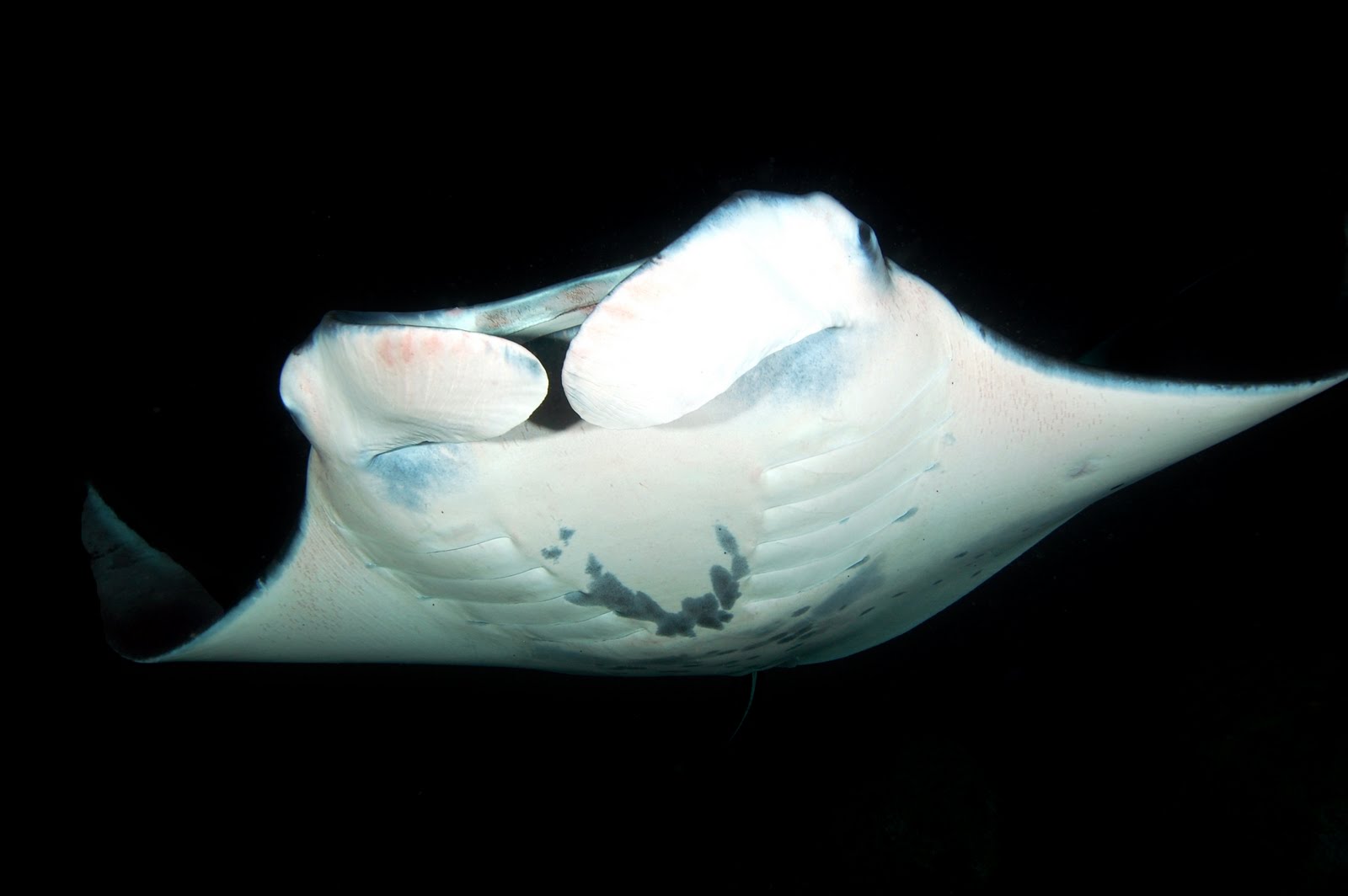
Here are the highlights of the Kona manta ray night dive. I shot about 50 pictures and 10 keepers. Shooting conditions were not easy with surge, darkness (making it hard to autofocus) and lots of plankton in the water but it was a hugely memorable experience.
Full set of pictures here.


Full set of pictures here.


Monday, October 25, 2010
Amazing Kona Manta Ray Night Dive
I was on the Hawaii's Big Island recently for a good friend's wedding and had the good fortune doing the Kona manta ray night dive. It's a world famous dive in a shallow bay where giant manta rays have been coming for years at night to feed on the plankton. Every night, boats take divers and snorkelers out to the bay, shine powerful lights to attract plankton, and hope for mantas to come. A normal night apparently brings 2-5 mantas but there are unfortunate nights where none come out to play. The mantas range in size from 2-6m wingspan and are quite a sight to behold.
We went out with Fair Wind. We started out by meeting at 5.45pm at the dock. There were more than 20 of us (all snorkelers except 3) so it took a while to do the paperwork. Then we boarded the boat for the 10 min boat ride to the manta area. Fair Wind specializes in snorkelers, which is a good thing as there are not many divers in the water. I heard that some nights the water can be really crowded.
The snorkelers got in and hung on to a large makeshift float with bright lights on it, while the divers submerged and started looking around. At first, there was not much life except a few reef fish and a couple of hunting morays. We caught a glimpse of 2 mantas fly by but they did not hang around long enough to get a good look. After 30 min of circling the area and not seeing much, I was just about resigned to not seeing any mantas that night... then suddenly 2 large mantas swam by and started doing acrobatics right in front of us! I began snapping pictures like crazy. The video guy's lights really attracted the mantas and they began doing somersaults and fly bys right before him. At times, they came so close that it really seemed like they would crash into us, but they would always turn away at the last moment to avoid a collision. It was incredible to watch such large creatures move so quickly and with such grace.
We got to spend about 30 min with the 2 mantas before I was low on gas and had to surface. Just as I was ascending, one manta came straight at me with its mouth wide open. I managed to fire off one shot of its gaping mouth before it swooped up and over my head, bumping my camera in the process. What a rush! The dive absolutely lived up to its reputation of being "one of the top ten things to do in your lifetime" (Travel Channel)!
I got back on the boat to find most of the snorkelers seasick. Some had even left the water before the 2 mantas showed up. I know the divers had a great time but maybe half of the snorkelers did not as they had bobbed in cold, choppy seas for 30 min without seeing anything.
Unfortunately, I did not have any time to do any other dives in Hawaii. That will have to be for next time...
I'll post pictures up in a few days' time once I have had time to edit them.
We went out with Fair Wind. We started out by meeting at 5.45pm at the dock. There were more than 20 of us (all snorkelers except 3) so it took a while to do the paperwork. Then we boarded the boat for the 10 min boat ride to the manta area. Fair Wind specializes in snorkelers, which is a good thing as there are not many divers in the water. I heard that some nights the water can be really crowded.
The snorkelers got in and hung on to a large makeshift float with bright lights on it, while the divers submerged and started looking around. At first, there was not much life except a few reef fish and a couple of hunting morays. We caught a glimpse of 2 mantas fly by but they did not hang around long enough to get a good look. After 30 min of circling the area and not seeing much, I was just about resigned to not seeing any mantas that night... then suddenly 2 large mantas swam by and started doing acrobatics right in front of us! I began snapping pictures like crazy. The video guy's lights really attracted the mantas and they began doing somersaults and fly bys right before him. At times, they came so close that it really seemed like they would crash into us, but they would always turn away at the last moment to avoid a collision. It was incredible to watch such large creatures move so quickly and with such grace.
We got to spend about 30 min with the 2 mantas before I was low on gas and had to surface. Just as I was ascending, one manta came straight at me with its mouth wide open. I managed to fire off one shot of its gaping mouth before it swooped up and over my head, bumping my camera in the process. What a rush! The dive absolutely lived up to its reputation of being "one of the top ten things to do in your lifetime" (Travel Channel)!
I got back on the boat to find most of the snorkelers seasick. Some had even left the water before the 2 mantas showed up. I know the divers had a great time but maybe half of the snorkelers did not as they had bobbed in cold, choppy seas for 30 min without seeing anything.
Unfortunately, I did not have any time to do any other dives in Hawaii. That will have to be for next time...
I'll post pictures up in a few days' time once I have had time to edit them.
Saturday, October 02, 2010
HK Underwater Photos
I came across an EXCELLENT album of underwater photos taken in Hong Kong. It belongs to a local underwater photographer by the name of Jackson Wong. Some of the stuff that he's managed to catch on camera blows my mind and is not stuff you would expect to find in HK - blue ringed octopus, bobtail squid, dragonet, and sawblade shrimp for example. The pictures are really outstanding and could hold their own against the best from anywhere. Props to the photographer. The album is here.
Intro to Hong Kong Diving
Yesterday, I did my first couple of dives in Hong Kong. I had been introduced by HK-based GUE instructor Graham Blackmore to one of his recent Fundamentals students, Catheryn. Catheryn introduced me to her diving club, the very active South China Diving Club. SCDC is a BSAC club that has been active in HK for years. They also apparently do a lot of drinking and social events but I have not been able to join them due to work.
Finally, I was able to join SCDC on a dive as yesterday was a public holiday due to National Day. We met at 9am at Aberdeen Boat Club in the southwest of HK. We had about 10 divers on a large boat that could fit a lot more, so it was a comfortable ride. The winds were blowing quite strongly from the northeast, so we motored to a sheltered spot on the western side of Beaufort Island, a 45 min boat ride from ABC.
My expectations were pretty low as everyone I had spoken to had warned me of the poor vis (sometimes down to 1m) and lack of marine life. But I was optimistic given that I have enjoyed diving in some pretty inhospitable places, such as Pulau Hantu, quarries, and rivers.
I left the camera at home as it was my maiden dive trip in HK and wanted to spend the time evaluating the conditions. It turned out to be the right decision as vis was too poor to get any decent shots.
After a briefing and setting up our gear, the teams splashed in. We dove in 2 flights, with one flight keeping a lookout on the boat while the other flight was in the water. After about an hour, the first flight returned and it was time to go. I was buddied up with Wing, a trimix diver who has been diving for many years. But today we would be doing some easy, shallow dives. Our first dive was to the north of the mooring point, with a max depth of around 16m. When we descended, we were greeted by murky green water and around 4m of vis. Good thing I brought my HID light! The bottom was rubbly and barren until about 13m, where there were lots of car-sized boulders covered in beautiful orange sponges. We mostly hung around the 11-13m depth where most of the soft corals were. The macro life was surprisingly good, and we saw several crabs, a couple of wire coral goby (my favorite!), and 2 cowries. The highlight was seeing a very cute white baby cuttlefish the size of my pinkie finger nail.
We had a short surface interval and lunch on the boat before diving again. This time, we headed south from the mooring. Funnily enough, there were no orange sponges at all and the bottom was covered in smaller rocks and nasty sea urchins. The visibility had deteriorated to 3m and the current had picked up a little. After a few minutes of not seeing anything interesting, I feared that we might have headed the wrong way... until we started to notice lots of peppermint shrimp (another of my favorites!) hiding beneath many of the rocks. Slowly, we began to notice more and more macro life - 3 morays, 3 banded coral shrimp (including the largest one I have ever seen with a 1 inch diameter body), crabs, hermit crabs, a tiny nudibranch egg ribbon, and lots of wire coral gobies. The dive turned into quite a prolific one and a test of our powers of observation. As anyone who likes macro life can attest to, this is the best kind of dive!
Back on the boat, we packed up and headed back to shore, arriving back at ABC at 5pm. Overall, I was pleasantly surprised by the quality of the dives. I was heartened by the fact that everyone said that the vis is about as bad as it gets in HK. I really look forward to diving some of the better vis spots. It's a real pleasure to do some decent dives in my back yard, all within a day's work.
Finally, I was able to join SCDC on a dive as yesterday was a public holiday due to National Day. We met at 9am at Aberdeen Boat Club in the southwest of HK. We had about 10 divers on a large boat that could fit a lot more, so it was a comfortable ride. The winds were blowing quite strongly from the northeast, so we motored to a sheltered spot on the western side of Beaufort Island, a 45 min boat ride from ABC.
My expectations were pretty low as everyone I had spoken to had warned me of the poor vis (sometimes down to 1m) and lack of marine life. But I was optimistic given that I have enjoyed diving in some pretty inhospitable places, such as Pulau Hantu, quarries, and rivers.
I left the camera at home as it was my maiden dive trip in HK and wanted to spend the time evaluating the conditions. It turned out to be the right decision as vis was too poor to get any decent shots.
After a briefing and setting up our gear, the teams splashed in. We dove in 2 flights, with one flight keeping a lookout on the boat while the other flight was in the water. After about an hour, the first flight returned and it was time to go. I was buddied up with Wing, a trimix diver who has been diving for many years. But today we would be doing some easy, shallow dives. Our first dive was to the north of the mooring point, with a max depth of around 16m. When we descended, we were greeted by murky green water and around 4m of vis. Good thing I brought my HID light! The bottom was rubbly and barren until about 13m, where there were lots of car-sized boulders covered in beautiful orange sponges. We mostly hung around the 11-13m depth where most of the soft corals were. The macro life was surprisingly good, and we saw several crabs, a couple of wire coral goby (my favorite!), and 2 cowries. The highlight was seeing a very cute white baby cuttlefish the size of my pinkie finger nail.
We had a short surface interval and lunch on the boat before diving again. This time, we headed south from the mooring. Funnily enough, there were no orange sponges at all and the bottom was covered in smaller rocks and nasty sea urchins. The visibility had deteriorated to 3m and the current had picked up a little. After a few minutes of not seeing anything interesting, I feared that we might have headed the wrong way... until we started to notice lots of peppermint shrimp (another of my favorites!) hiding beneath many of the rocks. Slowly, we began to notice more and more macro life - 3 morays, 3 banded coral shrimp (including the largest one I have ever seen with a 1 inch diameter body), crabs, hermit crabs, a tiny nudibranch egg ribbon, and lots of wire coral gobies. The dive turned into quite a prolific one and a test of our powers of observation. As anyone who likes macro life can attest to, this is the best kind of dive!
Back on the boat, we packed up and headed back to shore, arriving back at ABC at 5pm. Overall, I was pleasantly surprised by the quality of the dives. I was heartened by the fact that everyone said that the vis is about as bad as it gets in HK. I really look forward to diving some of the better vis spots. It's a real pleasure to do some decent dives in my back yard, all within a day's work.
Monday, July 19, 2010
Lembeh Photos
Full set of pictures is here.
 Bubble shrimp at Kelapa Dua. 105mm, 1/250s, f/22, ISO 200
 Flamboyant cuttlefish at Jahir 2. 105mm, 1/250s, f/22, ISO 200
 Pair of coleman shrimp on fire urchin at Makawide. 105mm, 1/250s, f/25, ISO 200
 Emperor shrimp hitching a ride on a nudibranch at TK3. 105mm, 1/250s, f/20, ISO 200
 Pregnant mantis shrimp at Runu Point. 105mm, 1/250s, f/22, ISO 200
 Candy crab at Nudi Retreat. 105mm, 1/250s, f/22, ISO 200
 Pair of wire coral shrimp at Nudi Retreat. 105mm, 1/250s, f/32, ISO 200
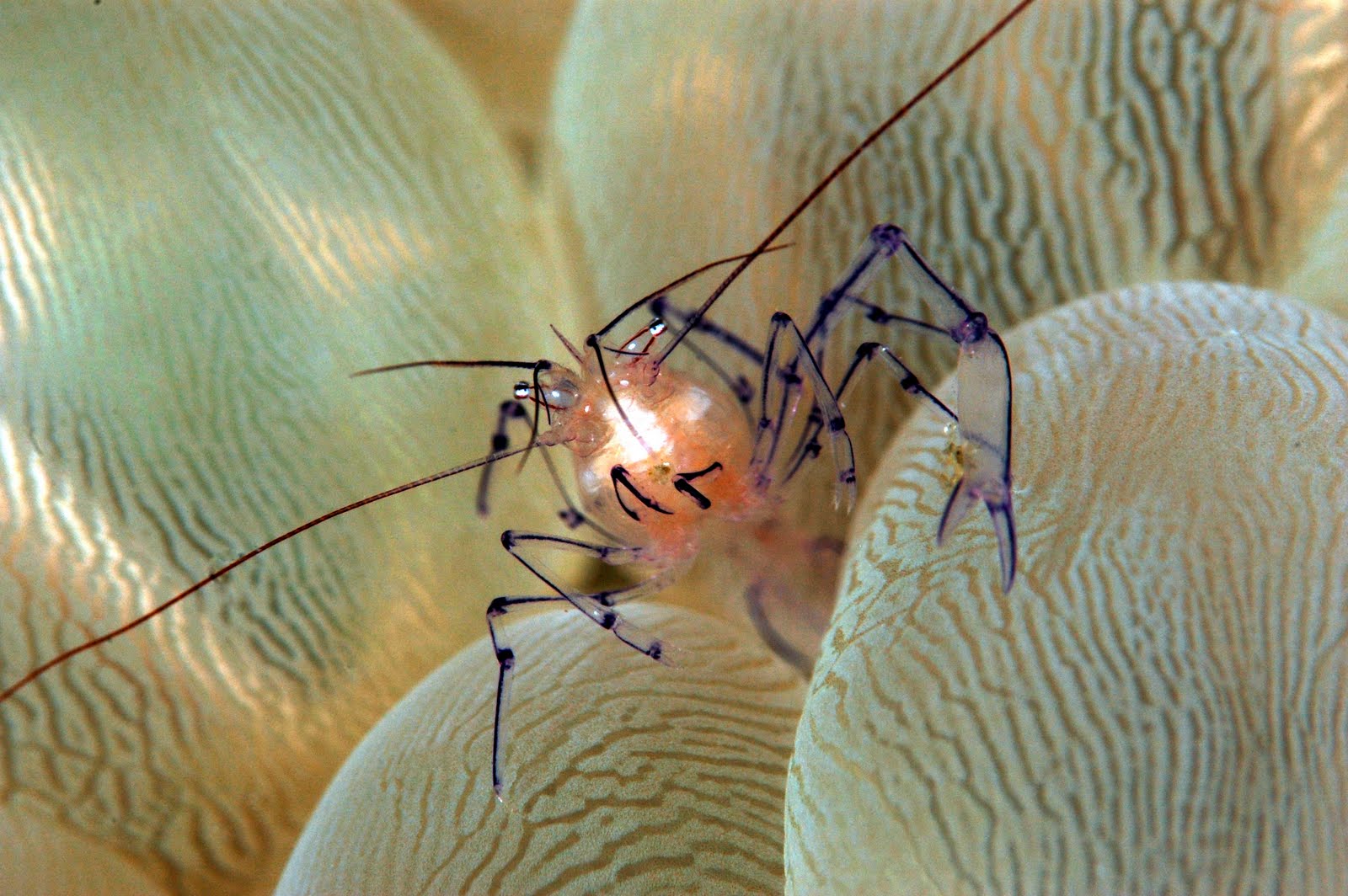 Bubble shrimp at Kelapa Dua. 105mm, 1/250s, f/22, ISO 200
 Flamboyant cuttlefish at Jahir 2. 105mm, 1/250s, f/22, ISO 200
 Pair of coleman shrimp on fire urchin at Makawide. 105mm, 1/250s, f/25, ISO 200
 Emperor shrimp hitching a ride on a nudibranch at TK3. 105mm, 1/250s, f/20, ISO 200
 Pregnant mantis shrimp at Runu Point. 105mm, 1/250s, f/22, ISO 200
 Candy crab at Nudi Retreat. 105mm, 1/250s, f/22, ISO 200
 Pair of wire coral shrimp at Nudi Retreat. 105mm, 1/250s, f/32, ISO 200
Saturday, July 17, 2010
Lembeh Trip Report, July 2010
I just got back from 6 days at NAD Lembeh. Silkair flies direct to Manado, and a 60 min car and 30 min boat ride later, I was at the resort. NAD is a small resort with only 12 rooms. It is quite rustic and local. The rooms are quite basic but I appreciated the small ecological footprint as the energy and water needs are kept to a minimum. The food is local and quite good. Dive sites are all within 15 min boat ride from the resort and the boats are comfortable and fast, with drinking water, snacks, and fruits on board. Nitrox is available at a small additional charge.
Wednesday, June 30, 2010
Photography Trip to Lembeh Straits
My next diving trip will be to the Lembeh Straits in North Sulawesi. When I last went to Manado in December 2008, we spent most of the time diving Bunaken and only one day diving Lembeh. It was on that trip that I got hooked on underwater photography. Ever since then, I have been wanting to go back to Lembeh. This time, I will be staying at NAD Lembeh. I will be spending 2 days getting photo instruction from Mike Veitch (his website is here) and the rest of the time hopefully practicing my new skills.
On my list of things to photograph:
Bobbit worm
Blue ringed octopus
Flamboyant cuttlefish
Mandarinfish
Stargazer
Hairy frogfish
Lots and lots of nudis!
On my list of things to photograph:
Bobbit worm
Blue ringed octopus
Flamboyant cuttlefish
Mandarinfish
Stargazer
Hairy frogfish
Lots and lots of nudis!
Thursday, May 27, 2010
Bali Trip Report

After spending 8 days on a diving safari all over Bali, I feel like I know a little something about diving in Bali. Bali is a big island with small roads. I spent a lot of time in the van driving from place to place. Notable was the 5am start from Sanur to Menjangan (a 4 hour drive). There wasn't a lot of downtime at all considering all the traveling and the logistics of the dive sites (more on that in a moment).
Diving in Bali is highly varied with pelagic cleaning stations, wall dives, reefs, black sand, wrecks, and everything in between. Each area is dove differently - by the end of my trip I had dove by speedboat (Nusa Penida), large fishing boat (Menjangan), shore (Puri Jati, Tulamben, Seraya), outrigger boat (Amed), and medium sized fishing boat (Padang Bai). The marine life is also highly varied, featuring pelagics (mola molas, mantas, sharks), schooling fish (jacks, rainbow runners), reef fish, and all manner of macro critters. I can't think of many places with this much variety all within a few hours' drive.
Here are my opinions on the major diving areas:
Nusa Penida: Famous for Manta Point, a prolific manta cleaning station, and Crystal Bay, a mola mola cleaning station. We saw 7 mantas for 70 min on our dive at Manta Point. Mola mola season is July-October so we did not see much at Crystal Bay. Nusa Penida, contrary to current practice, is not a place to take beginners. The currents can be highly unpredictable and very strong. It can also be very cold (low 20s C). Go to Nusa Penida to see the mantas and mola molas, which are very special, but there is not much else there.
Menjangan Island: The biggest let down. I had heard all kinds of hype about the beautiful reefs and walls of Menjangan. I would rate Menjangan as very mediocre reef/wall diving. The underwater seascapes can be quite beautiful with large fans and barrel sponges, but there are not many fish there at all. Combined with the remoteness of the location, I would not recommend visiting Menjangan.
Puri Jati: Completely barren black sand area. There is NOTHING there except a few anemones, anemone critters (porcelain crab, shrimp, clownfish), lionfish, and garden eels. It is, however, a relatively common place to see the mimic octopus, which made my day.
Tulamben, Seraya, Amed: These three areas are within 10 min drive of one another in northeast Bali. The wreck of the Liberty is the main attraction in Tulamben. It can be dove from shore and starts at 5m. It is home to large schools of bumphead parrotfish, jacks, and many other fish. All three areas are black sand muck diving heaven. This is where I saw the majority of critters on my list - harlequin shrimp, coleman shrimp, wire coral shrimp and gobies, snake eels, boxer crab, pygmy seahorses, etc.
Padang Bai: Padang Bai is mostly white sand and artificial reef diving. The dive sites are close to shore and are full of trash. The marine life can be good but hit or miss. I saw several rare nudis and clown frogfish here.
I dove with Bali Scuba. They are a bit of a paradox. My dive guide Komang was excellent and responsible. He was always on time and the transfers were flawless. Bali Scuba HQ is rather disorganized, though, and nobody at the office seems to know what is going on. For an outfit that sees as much volume as they do, they don't get a lot of photographers and I was rather annoyed that nobody could advise me on lens choices for the various dive sites.
Our dives generally followed the same profile - descend to 25m and make our way back up to the shallows. Dive times regularly exceeded 60 min and I never felt rushed. Komang knew the dives sites well and has a good eye.
The infrastructure in Bali is quite poor in the north, so bring everything you need and don't count on being able to buy anything.
Would I go back? Most definitely, but I would focus on Nusa Penida (for mantas and mola molas) and Tulamben, Seraya, and Amed for macro stuff.
Subscribe to:
Posts (Atom)